Join our newsletter
Explore the latest news in education and development
By subscribing you agree to our Privacy Policy



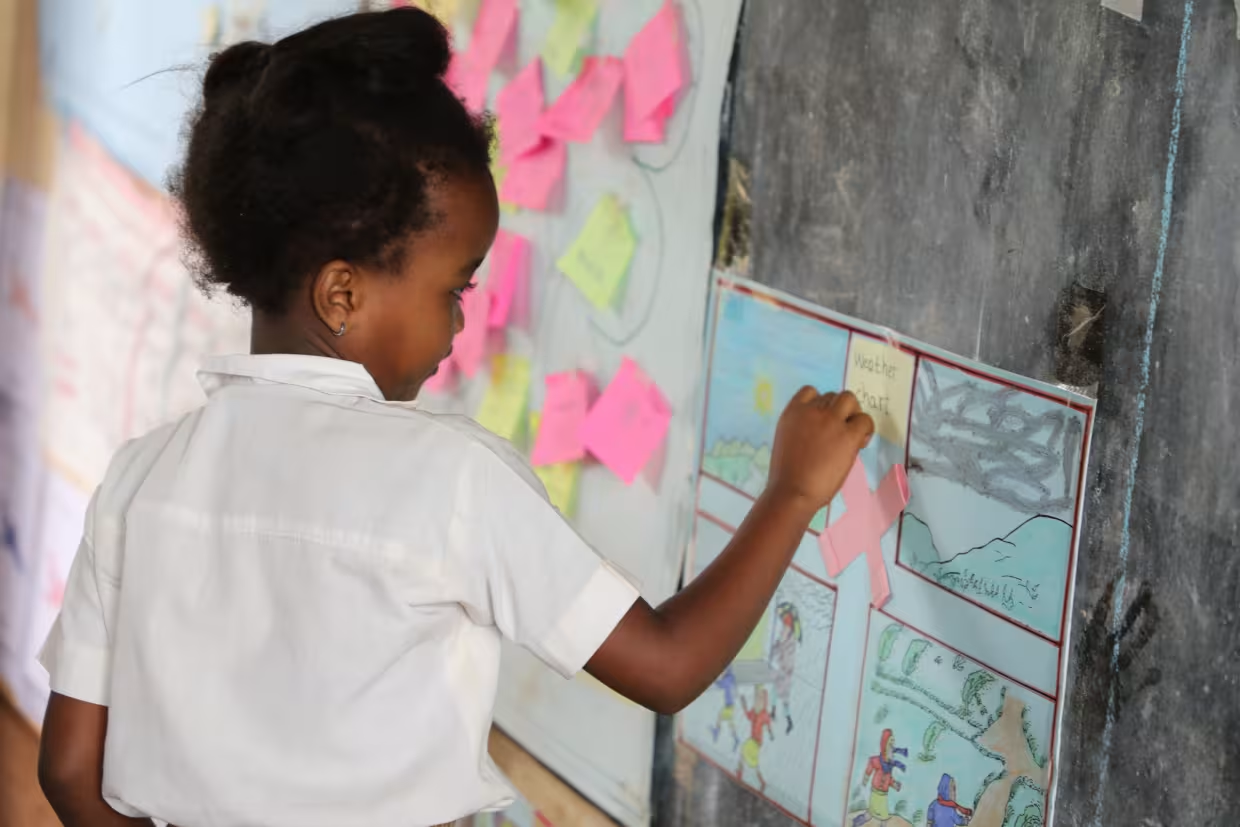
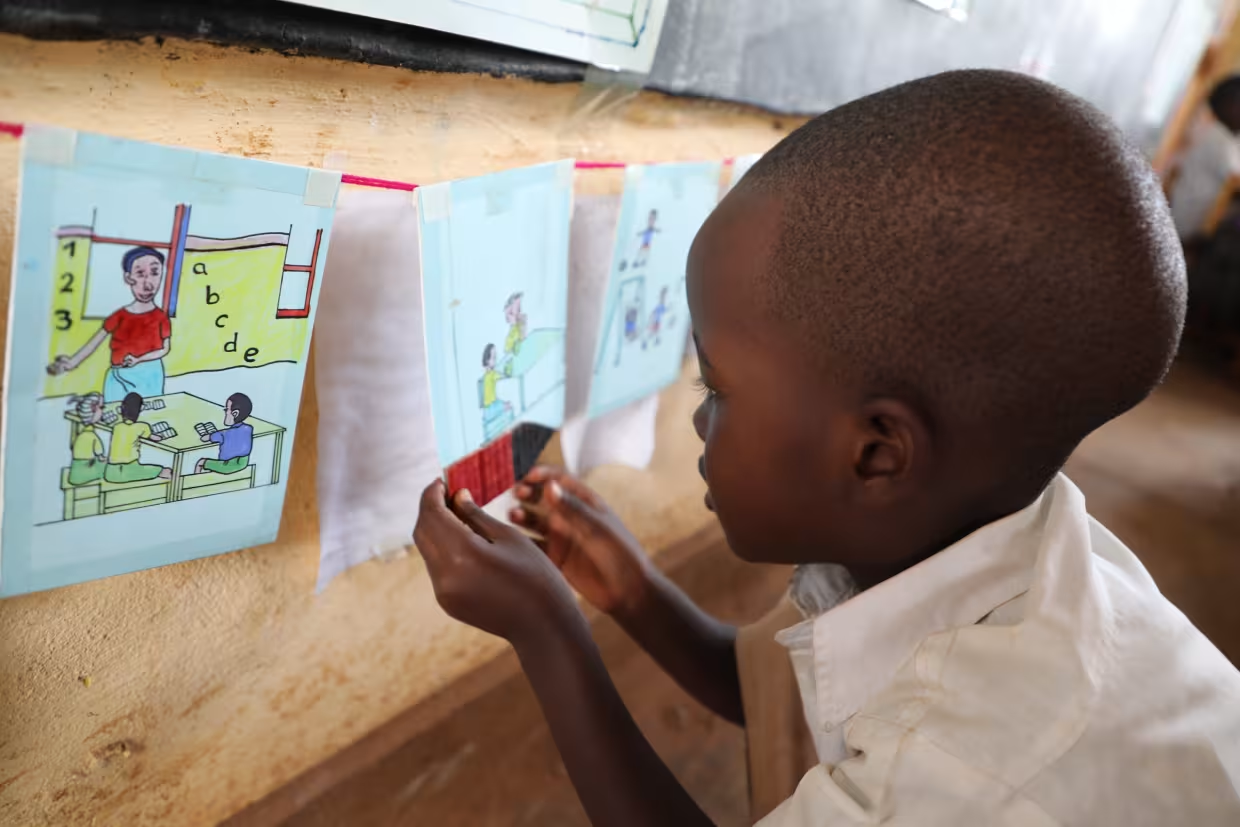
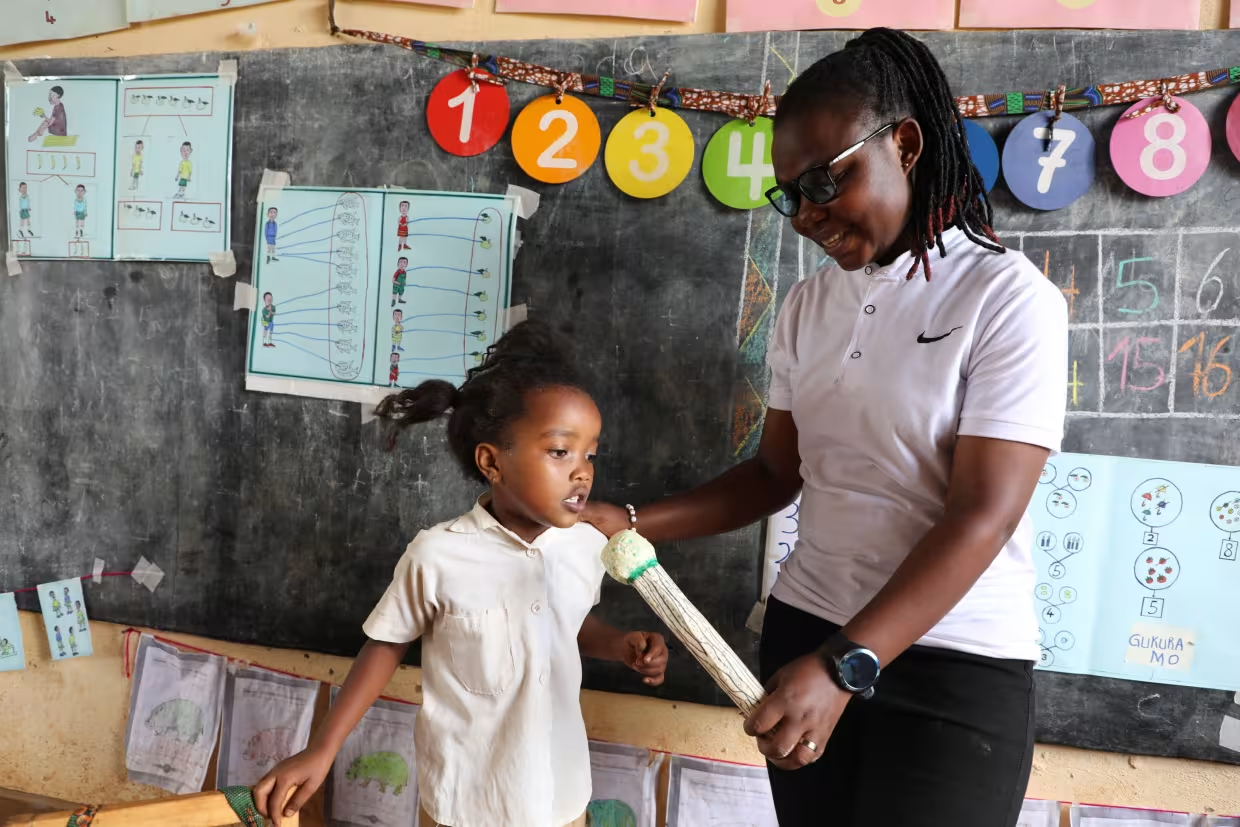
In the rolling green hills of the rural Rwamagana district of Eastern Rwanda, Denyse Uwimana's classroom buzzes with the joyful sounds of play and learning. As a Grade 3 Early Childhood Education (ECE) teacher at G.S Muyumbu 12-Year Basic Education school, Ms Uwimana oversees over 60 learners, each day transforming education with creativity and dedication.
Growing up, Ms Uwimana aspired to become a nurse. Her mind shifted towards education after her headteacher's advice: "You’ll get a job easily after completing high school." Despite initial reluctance, she enrolled at Teacher Training College (TTC) in 2012 to study ECE—a field then largely misunderstood and overlooked in Rwanda.
“When I told people that I was studying ECE, they laughed,” She recalls. "They’d say, ‘How will you learn to wipe kids’ runny noses? Are you just becoming a house helper?”
With a class of just 29 students in the final year, including only one boy who resisted societal norms, Denyse and her colleagues faced scepticism and derision. Yet, through hands-on lessons like crafting teaching aids from local materials and teaching through songs, Ms Uwimana found her passion for early childhood education.
By the time Ms Uwimana graduated in 2015, public ECE schools were still almost non-existent. Parents and communities, especially in rural areas, had little understanding of ECE. "I would tell people that I was a ‘nursery’ teacher, but they would confuse it with a ‘nurse’, as ‘nursery’ and ‘nursing’ sound almost similar in our local language."
Eventually, Ms Uwimana discovered a grassroots ECE initiative where parents had organised informal classes for children. This initiative evolved into a formal class at G.S Muyumbu, where she began her teaching career. Starting with over 100 children of varying ages in one room, managing the class was challenging.
Determined to enhance her teaching methods, Ms Uwimana initially used visual aids and songs. It wasn’t until she attended a training on “learning through play” that she realised a key ingredient was missing: play itself. The training was part of the IT’S PLAY project supported by The LEGO Foundation and implemented by the Rwanda Basic Education Board in partnership with VVOB.
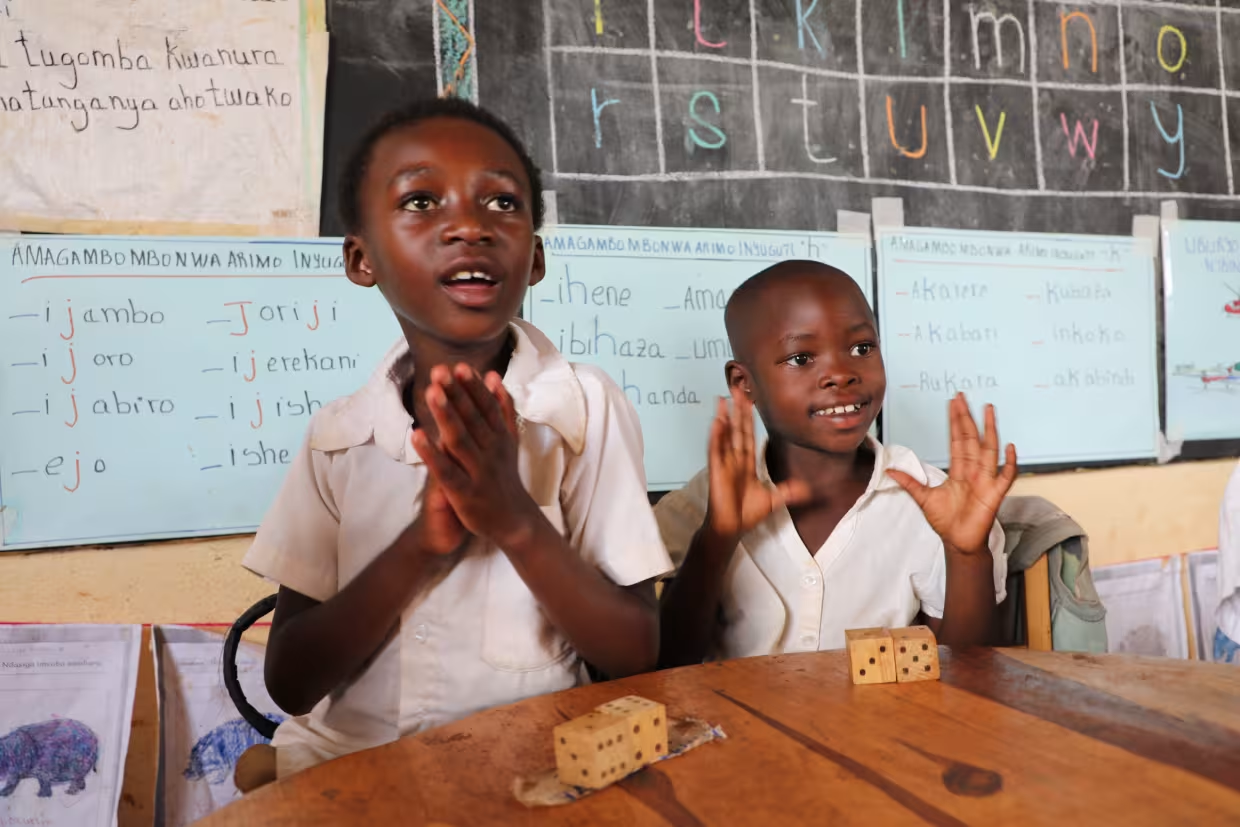
“I would teach counting and writing numbers in figures separately and would ask learners to write numbers with a pencil in their notebooks, and on a blackboard with chalk. "The training has shown me that combining counting and writing through playful activities is more effective," she observed.
Now, she incorporates everyday objects like bottle tops, rocks, and grains into her lessons. She teaches numbers and arithmetic through engaging activities, significantly reducing the time it takes for her students to grasp concepts. "I used to spend about seven days for learners to master writing a certain number. It now takes only three days”.
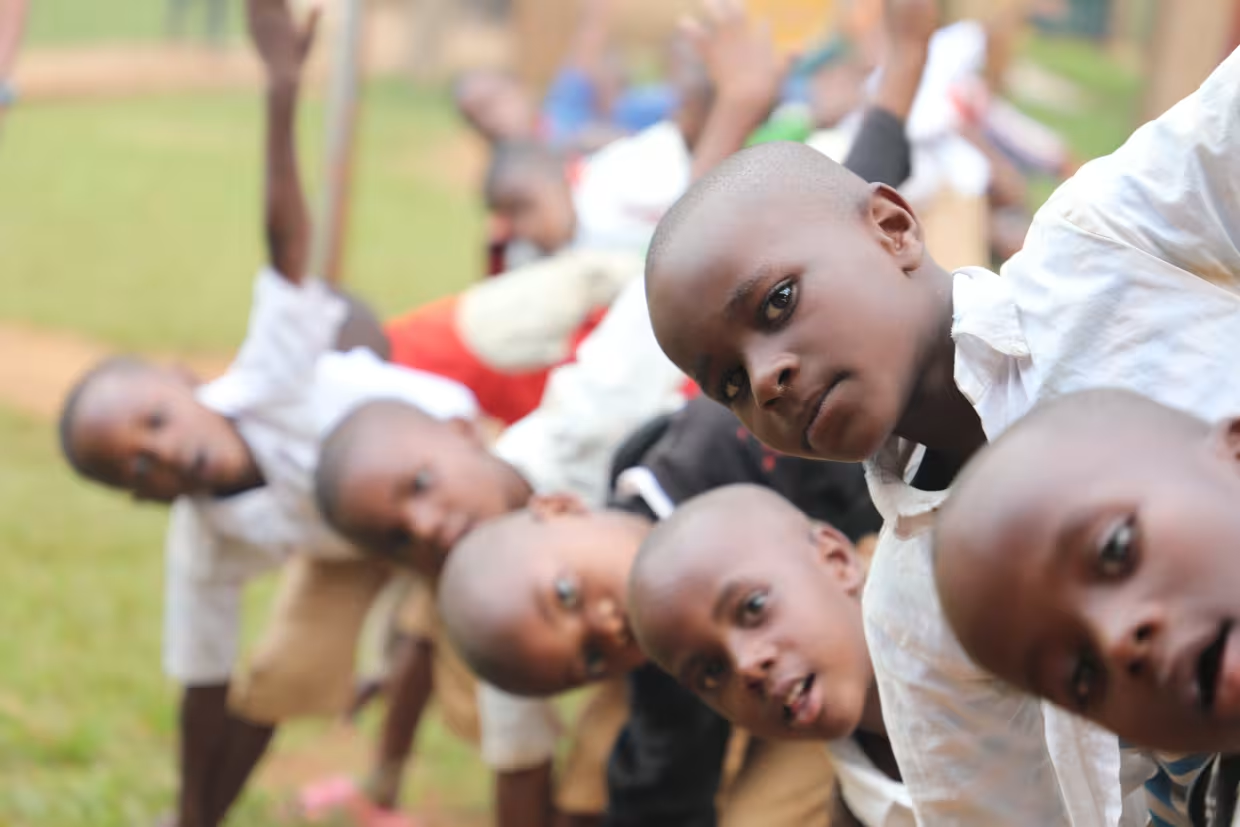
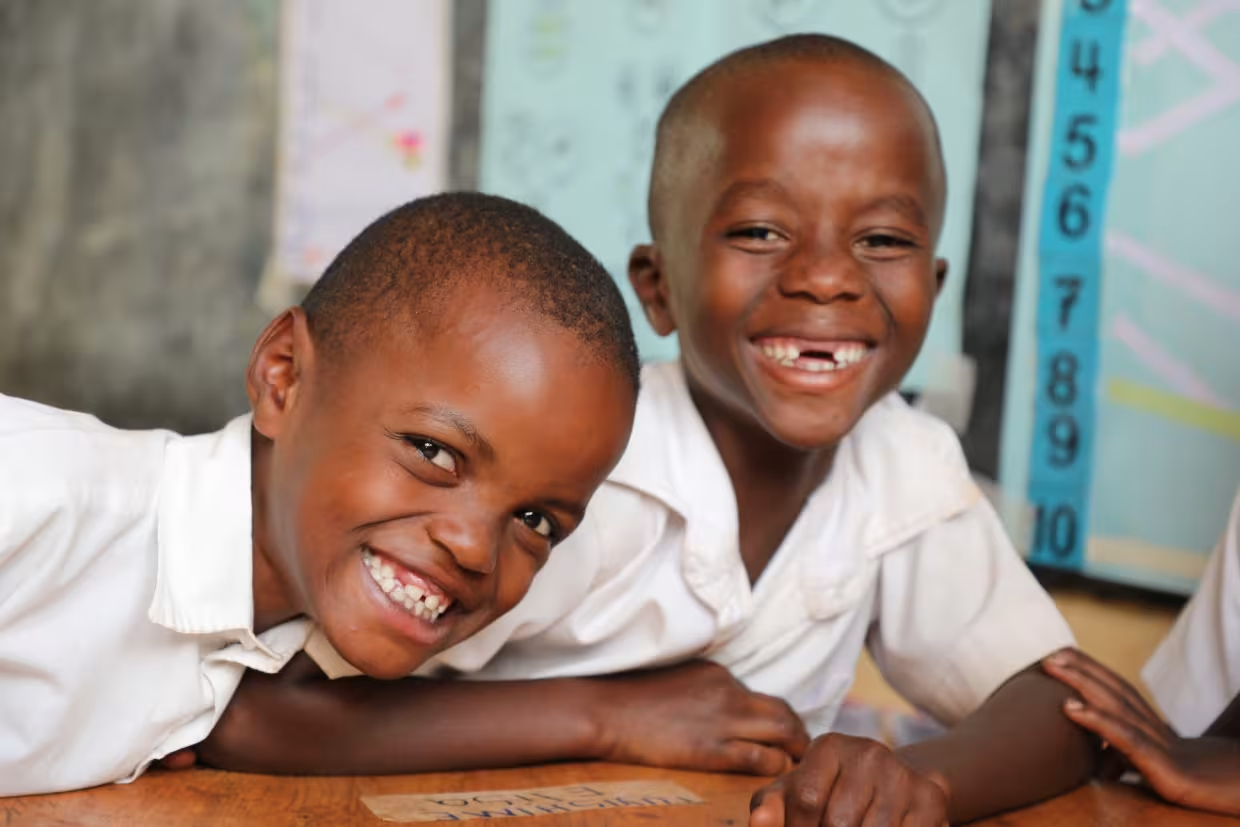
The transformation is evident: learners are now excited about playing and they learn as they play. Children who once fell asleep now stay awake and engaged.
Initially, Ms Uwimana used to call each learner to count objects in front of other learners. When she introduced play into the classroom, she started grouping learners in small groups and distributed learning materials to each table. “Learners fought over materials, not understanding they were for everyone. Some of them would keep teaching aids in their pockets or bags and take them home.”
Through patience and clear explanations, she managed to establish a collaborative learning environment. “Now they know that materials are for learning, not keeping!”
Ms Uwimana has come to see her classroom as a place of exploration and discovery. "Learners distribute objects, solve problems, and notice discrepancies—all through play. For instance, when I ask learners to distribute six bottles equally to five children, they will return the remaining bottle. In case one or more objects are missing they also notice it and tell me,” she said.
"The transformation is evident: learners are now excited about playing and they learn as they play. Children who once fell asleep now stay awake and engaged.”

The headteacher, Jean Claude Mwumvaneza, 47, highlights the importance of ECE and actively supports teachers. “I know that children learn better through play and develop holistically and faster. This is why we motivate and support ECE teachers, especially in implementing learning through play, by giving them time and listening to them,” he said.
Mr Mwumvaneza has been a headteacher for 22 years and has led G.S Muyumbu for eight years, a school with more than 3,000 students, including 184 children in ECE. In 2016, he attended a continuous professional development diploma programme in Effective School Leadership offered by Rwanda Basic Education in collaboration with the University of Rwanda College of Education, supported by VVOB.
For Ms Uwimana, the skills and understanding that Mr Mwumvaneza has developed for ECE have been of critical importance to enable her to build a supportive learning environment. “We are given enough time to prepare lessons, make teaching aids and learn from each other. For instance, when my colleague and I completed the training in learning through play, the school leaders encouraged us to share with a colleague who didn’t attend the training.” She emphasises that support like this from school leaders is vital for teachers.
Through their dedication and innovative approaches, Ms Uwimana and Mr Mwumvaneza show that a supportive school environment and integration of play can enhance the quality of early childhood education, ensuring every child learns, grows, and enjoys their right to play.
By subscribing you agree to our Privacy Policy